CONCEALING THE TRUTH
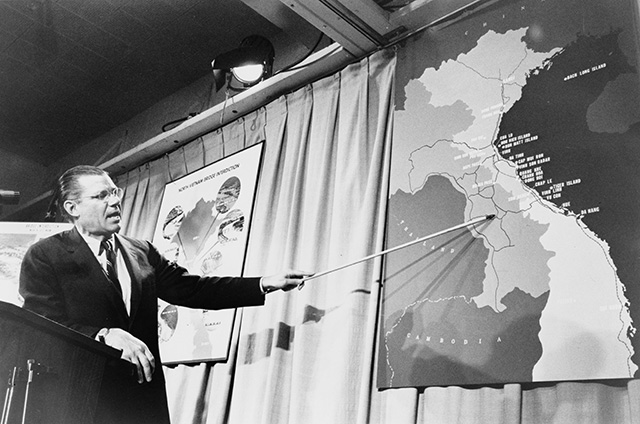
In Chapter 2 of Elements of Journalism, “Truth: the Most Confusing Principle,” the authors begin with a story of how Secretary of Defense Robert McNamara misled reporters about the dire state of the conflict in Vietnam. At the same time he was telling the press he was optimistic about progress, McNamara reported to President Lyndon Johnson, “The situation is very disturbing.”
In some ways, that story is similar to one that broke this week:
‘Play it down’: Trump admits to concealing the true threat of coronavirus in new Woodward book

CNN: President Donald Trump admitted he knew weeks before the first confirmed US coronavirus death that the virus was dangerous, airborne, highly contagious and “more deadly than even your strenuous flus,” and that he repeatedly played it down publicly, according to legendary journalist Bob Woodward in his new book “Rage.”
“This is deadly stuff,” Trump told Woodward on February 7.
(Scroll down this article if you want to hear Trump’s audio clips.)
LIES OR RESPONSIBLE LEADERSHIP STRATEGY?
In this CBS interview, 60 Minutes correspondent John Dickerson provides an excellent analysis of why Trump’s rationale — that he was preventing panic by downplaying the seriousness of COVID-19 — is in fact more like dereliction of duty.
Dickerson:
– If you read any of the manuals for leaders in a public health crisis, they say the most important thing is to be truthful to people.
– In this case if you are not truthful to people, you send them out into the world and they make the situation worse. They spread it.
- The president is mischaracterizing how he handled the virus in its early period. He was saying that talk of the virus and its virulence was a Democratic plot and something that the media was raising. If you don’t tell the truth at the beginning, not only do the cases snowball, but then people don’t trust you when future decisions have to be made and they have to listen to you.
– When you tell them the truth, it binds people together.
— CBS News
PLAYBOOK FOR LEADERS IN CRISIS

In this NYTimes Opinion video, The Three Rules of Coronavirus Communication, the author compares how other countries responded to the crisis.
NYTimes: While the United States was creating confusion with its virus messaging, the rest of the world got creative. In this global take on the pandemic reveals these key aspects of communication in a time of misinformation.
Imagine living in a country where, six months into a pandemic, you aren’t totally confused. You know exactly where and when to get tested. Your child’s school has been clear and transparent about its reopening plan. On the whole, you trust your government to make the right decisions.
For millions around the world, this isn’t a fantasy — it’s their reality. While Americans are still fighting over masks, New Zealand, Vietnam and Rwanda, to name a few, used clear and consistent public health messaging to build trust. This made it possible to stem their initial outbreaks and control new cases as they popped up.
Three rules of Coronavirus communication:
1. Build trust
2. Know your audience
3. Think long-term
— NYTimes
MIRROR MIRROR
Mark Zuckerberg said this week that Facebook does not try to enrage but rather to engage and that the platform offers an alternative media for some who never saw themselves reflected in traditional media.
Shira Ovide in the NY Times argues that Facebook does not, in fact, reflect reality, as Zuckerberg suggests.
NYTimes: Mark Zuckerberg is the world’s most powerful unelected person, and it drives me bonkers when he misrepresents what’s happening on Facebook. In an interview that aired on Tuesday, Zuckerberg was asked big and thorny questions about his company: Why are people sometimes cruel to one another on Facebook, and why do inflammatory, partisan posts get so much attention?
Zuckerberg told “Axios on HBO” that Americans are angry and divided right now, and that’s why they act that way on Facebook, too. Zuckerberg and other Facebook executives consistently say that Facebook is a mirror on society. An online gathering that gives a personal printing press to billions of people will inevitably have all the good and the bad of those people.
It’s true but also comically incomplete to say that Facebook reflects reality. Instead, Facebook presents reality filtered through its own prism, and this affects what people think and do.
Facebook regularly rewrites its computer systems to meet the company’s goals; the company might make it more likely that you’ll see a friend’s baby photo than a news article about wildfires. That doesn’t mean that wildfires aren’t real, but it does mean that Facebook is creating a world where the fires are not in the forefront.
Facebook’s ability to shape, not merely reflect, people’s preferences and behavior is also how the company makes money. The company might suggest to a video game developer that tweaking its social media ads — changing the pitch language or tailoring the ad differently for Midwestern college students than for 40-somethings on the West Coast — can help it sell more app downloads.
Facebook sells billions of dollars in ads each year because what people see there, and how Facebook chooses to prioritize that information, can influence what people believe and buy.
Facebook knows it has the power to shape what we believe and how we act. That’s why it has restricted wrong information about the coronavirus, and it doesn’t allow people to bully one another online.
Further proof: An internal team of researchers at Facebook concluded that the social network made people more polarized, The Wall Street Journal reported in May. American society is deeply divided, but Facebook contributes to this, too.
So why does Zuckerberg keep saying that Facebook is a mirror of society? Maybe it’s a handy media talking point that is intentionally uncomplicated.
There are no easy fixes to make Facebook or much of the world less polarized and divided, but it’s dishonest for Zuckerberg to say his company is a bystander rather than a participant in what billions of people on its site believe and how they behave.
Zuckerberg knows — as we all do — the power that Facebook has to remake reality.
— NYTimes
ASSIGNMENTS
Read: This week’s reading is Elements of Journalism, Chapter 2 “Truth: the Most Confusing Principle.” In this chapter, the authors explain that while there is “absolute unanimity” that journalism’s first obligation is to the truth, there is also confusion about what “the truth means.”
A few highlights:
– Journalistic truth means more than just accuracy. It is a sorting out process that takes place between the initial story and the interaction among the public, newsmakers, and journalists. This first principle of journalism — its disinterested pursuit of the truth — is ultimately what sets it apart from other forms of communication.
– The truth is a complicated and sometimes contradictory phenomenon, but if it is seen as a process over time, journalism can get at it. First, by stripping information of any attached misinformation, disinformation, or self-promoting bias and then by letting the community react in the sorting out process that ensues.
– With the Internet, there emerged a new and important fourth model – a Journalism of Aggregation — in which publishers such as Yahoo News, search engines such as Google or Web communities such as Reddit — and with the rise of social media, in turn, individual citizens themselves — recommended and passed along content they had no direct role in producing and, often, made no effort to verify.
– The burden of verification has been passed incrementally from the news deliverer to the consumer.
– The best new journalism will compete in the marketplace of ideas by being more deeply reported and more transparent, by correcting the record for audiences that have been misinformed and by answering questions other accounts have left unclear.
– Truth cannot be assumed to occur automatically based on the presence of more sources.
– For the truth to prevail, journalists must make clear to whom they owe their first loyalty.
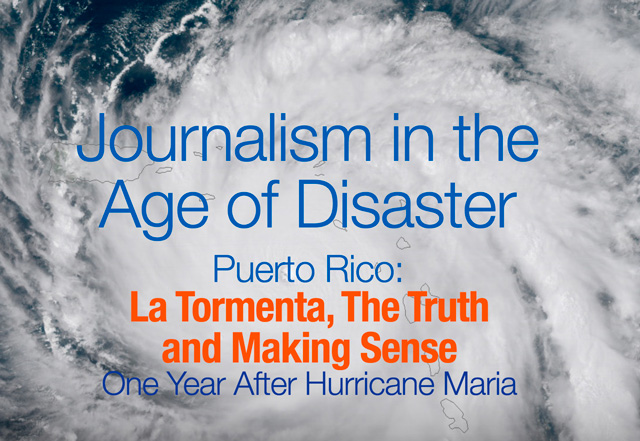
Watch: Journalism in the Age of Disaster: Truth, La Tormenta and Making Sense
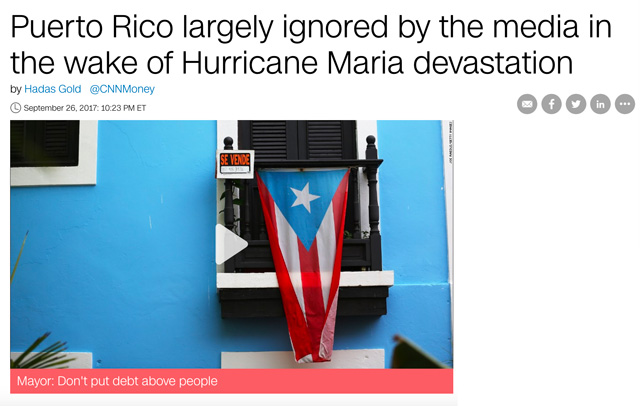
Watch (or listen to) the below conversation of Latino journalists as they assess media coverage of Puerto Rico in the year after Hurricane Maria. Think about it in light of Chapter 2: Truth the First and Most Confusing Principle.
Questions posed to the panel include: How have news organizations performed their duties as watchdog, witness and truth teller? How can we do better?
All of the journalists on the panel have covered Hurricane Maria and Puerto Rico’s struggle to recover from the devastation. They have also tried to provide the public with an accurate account of the fatalities that resulted from the hurricane.
Panelists in order of speaking:
– David Gonzalez, NYTimes photographer and columnist (moderator)
– Ed Morales, independent journalist, Columbia University professor
– Carla Minet, editor and reporter at the Centro de Periodismo Investigativo de Puerto Rico (Center for Investigative Journalism of Puerto Rico)
– Alana Casanova Burgess, producer at On the Media, WNYC
– Ana Teresa Toro, columnist, El Nueva Dia
I have the video starting at around 20 minutes after introductions. The formal panel discussion lasts to about 1:06.
Make notes for yourself as you listen and then in a 250-word essay, address a few of the below questions
What made you think?
What did you learn?
How was the truth served or not served by the type of journalism that followed Hurricane Maria?
Was there a unifying critique among the journalists?
What parts of the story did they think were not being told?
Think back to Elements Chapter 1 and the idea that in the horizontal information landscape journalism has these new roles, including of making sense out of chaos. How did these journalists think that function could be achieved in Puerto Rico coverage?
What is the role for journalism in times of environmental, economic and political disaster?
How did the US TV news coverage of the post-Maria story serve or not serve to expand understanding and comprehension?
What did panelists have to say about truth and subjectivity? About context? About pre-set formulas for understanding something? About racism? About colonization?
Post your response in the Discussion Board by Sunday, 11:59 PM.
Best
Professor McKenna