Case Study: Breaking News Coverage
Hurricane Irene offers an illustrative example of how media organizations are covering breaking news.
Twitter has become a critical news platform and a powerful way to monitor complex, rapidly evolving stories. It is used by media organizations to break news and promote stories. It is used by governmental agencies to disseminate information. It is used by the public to share minute-by-minute updates of how the story is impacting them. Likewise, sites like Flickr and YouTube can be great sources of information and news content. In addition to microblogging, many media organizations are using a “live” blog format for rapid-fire release of any incoming updates.
Thursday, August 25
The mayor begins to tweet on the storm, warning New Yorkers that they need to be prepared.


Friday, August 26
NYC.gov goes on Twitter/Facebook to announce the evacuation and release a map of zones.

Twitter: The mayor tweets the latest about the mandatory evacuation and links to a video of his lengthy press conference.
Twitter: NYC.gov down, the mayor directs the public to Twitter, Facebook

Twitter:

Facebook: 
Twitter: Scary pronouncements, hoarding and a call for evacuation


NY Times curates its special event Twitter feed

What about pets?


Tips

Twitter/YouTube: “Get the hell off the beach.”

Twitter: Sidebars begin to emerge with End Days and “Come on Irene” [sic]


Twitter/Flickr: Provisions


Facebook: 


CNN: Lines for the shelter

YouTube: ASA Inundation & Flood Modeling: New York City

Twitter: MTA Shutdown


Key word #MTA

Tracking NYC’s emergency responders:
Live Audio Radio Reference: Hurricane/NY Traffic – Two kayakers removed from water

Governmental sources tweet media and info:
NASA shots from space

NWS Public Advisory

Twitter: FEMA and Red Cross: “We have an APP for that.”

Obama with FEMA

Twitter/Flickr: Preview of the storm from other regions and states: NC, Maryland, Florida

Twitter:

Flickr:

Flickr:

Flickr:

Flickr:

Flickr:

Flickr:

Flickr: 
Twitter: 
Live Blogging: Many media organizations adopt a live blog structure to update their Irene status
Reuters:

Storify: An online tool that allows you to aggregate content from Twitter, Flickr and YouTube

Article: Social, mapping and mobile data tell the story of Hurricane Irene. Citizens will act as important sensors as a huge storm washes up the East Coast of the United States.
Saturday, August 27
Twitter: More foreboding. Updates from NC, Starbucks closes
Flickr: 
Twitter: 


US Army update: A lone Tomb Sentine walks his tour in humble reverence

Coffee shops on Twitter:


Twitter/Flickr: MTA closes down


Twitter: 
Twitter: 
Twitter: 
Facebook: 
Twitterverse: Meanwhile, on Twitter the storms spins off in many directions
Twitter topic: “RockYouLikeAHurricane”

Twitter topic: “ThisisNewYork”

Twitter topic: “Category 1″

Twittertopic: “Subwayless”

Twitter topic: “Stormporn”

Twitter topic: Zone C

Twitter topic: “HurricanePlaylist”

HuffPost Irene:Hurricane Irene: Songs About The Woman Behind The Storm


Twitter:/YouTube/HuffPo: Bloomberg’s Spanish
Twitter topic: #BloombergSpanish

Huffington Post: El Bloombito

Twitter: On the streets
Twitter: Sanitation Dept turns over trash cans


Twitter: 
Facebook: Galway Hooker is open:

Twitter: Tanks
Twitter: Tourists
Facebook: 
Twitter: 
Twitter: 
GoodMorning America:

Twitter: Possible electrical shutdown

Twitter: Media directs readers to interactive tools
Google Crisis map:

Reuters hurricane tracker:


FL social media/hurricane tracker:

WNYC evacuation zones:

Electric gridcheck:

Periodic animations from NOAA.gov:

Zone checker:

Facebook: 
Facebook: Jersey Shore

Media crowdsourcing:


CNN’s iReport: 
NY Daily News photos: 
NYT Comments: 
Video: Live streaming, raw and webcams


Story angles:
Atlantic – Historic review of storms


WSJ: Stock market
“Trading volume was mostly light on Friday, as bankers fled from the storm or caught up on their late-summer vacation time. There was one notable exception: The market for catastrophe bonds, issued by insurers exposed to possible hurricane damage, saw a flurry of activity…And what about J.P. Morgan’s underground gold vault, at an undisclosed location in New York? “It’s secure,” said a person familiar with the situation, “and I am not going to say any more than that.”
NYPOST: The shelter experience, for those seeking a party, to those seeking movies, fine shelter dining “a culturally familiar menu.”
Gawker: Rikers Island Inmates Left Behind
Others: Tourists, airports, hold-outs, animals, financial winners and losers

Sunday, August 28
Irene arrives in the tristate area:


WNYC twitter:


Reports of damage trickle in:


Raw video: Life guard shack unrooted


NYC.gov asks for citizen reports:
The purpose of the NYC Site is for you to let the City and fellow New Yorkers know about weather conditions and weather-related service disruptions in your neighborhood.


NYT: Hi-res images

FLICKR: MTA releases water damage

Floodwaters covering the rails at the 148th Street / Lenox Subway Yard


Live streaming video Reuters


Twitter:

Twitter: Catskills

Lower Hudson Journal: Man dies trying to save boy


NYPost: Subway returns

Dangers of rapid-fire reports and user-generated content: Typos, hoaxes and fakes

NYT: “An image that many thought was Irene approaching North Carolina or New York was actually taken in Pensacola, Florida weeks ago.”
According to the Times, the photo was viewed 270,000 times on TwitPic, a Twitter image Web site.


Post-note: Mayor Bloomberg responds to parodies of his Spanish


Twitter has become an essential resource for journalists for reporting and promoting their work. First, we will spend some time familiarizing ourselves with how Twitter terminology and functionality. Next, we will examine a case study that illustrates how effective Twitter can be as a tool for tracking a story over time and geographical distance.
The growth of social networks, Twitter and Facebook in particular, have made them excellent places to tune into public dialogues.
A few statistics:
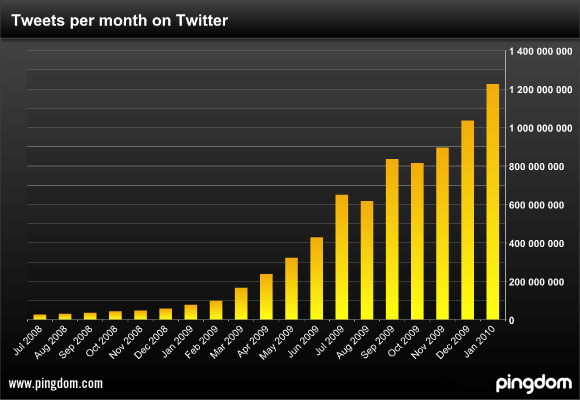
As of December 2009 Twitter was processing more than one billion tweets per month and around 50 million tweets per day and 600 tweets per second.
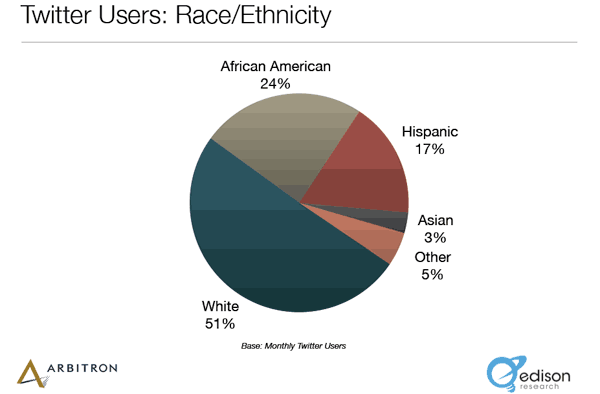
Women tend to be slightly better represented on social networks and African Americans are proportionately a bigger presence on Twitter.

Full report on data: 2011 Social Analysis
Tapping into the national psyche
1) Twitter trends
Twitter trends are posted on the home page of the site and show what everyone is talking about. We have covered some of the more notable breaking news events that happened on Twitter, such as the Mumbai attacks, the Hudson River plane crash and other emergencies.
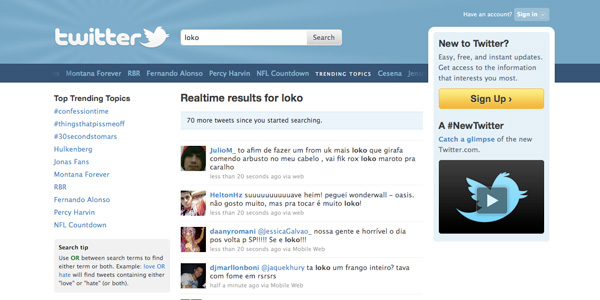
Harvard students literally took the pulse of the nation by monitoring certain key phrases used in tweets.
And their commentary:
Twitter is a gigantic repository for our collective state of mind. Every second, thousands of tweets reveal what everybody and their mother had for lunch, what Justin Bieber is up to, or what magnificent link you should be checking out right now. Individually, each tweet is mostly interesting to friends/fans of the tweeter, but taken together they add up to something more.
Alongside the explosive growth of Twitter users is an equally stunning growth of applications you can use to manage Twitter. Here is a list of those intended to help you pinpoint trends.
Getting Started
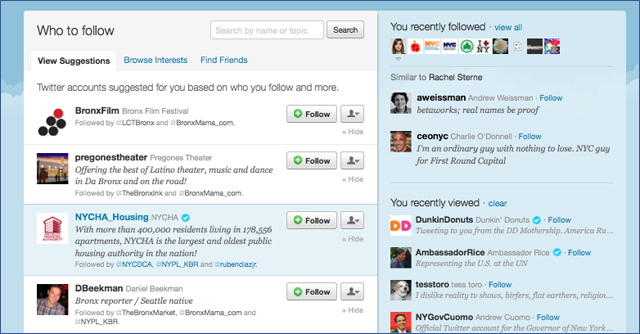
Deciding who to follow: