New Directions in Journalism
Predictions for Journalism: Nieman Lab Series
- Many of the native digital news organizations are small, nonprofit and young.
- Many of the smaller digital organizations focus on filling reporting gaps in local news and investigative journalism.
- Among the larger digital outlets, a number are investing substantially in global coverage.
- Digital news organizations are hiring a mix of legacy and non-legacy journalists, with a clear emphasis on new storytelling skills.
PEW Report: The Growth in Digital Reporting
Vice – “The Definitive Guide to Enlightening Information”

First Look – Intercept
The Intercept, launched in 2014 by Glenn Greenwald, Laura Poitras and Jeremy Scahill, is dedicated to producing fearless, adversarial journalism. We believe journalism should bring transparency and accountability to powerful governmental and corporate institutions, and our journalists have the editorial freedom and legal support to pursue this mission.

- First Look Media, Project X and the new FiveThirtyEight blog
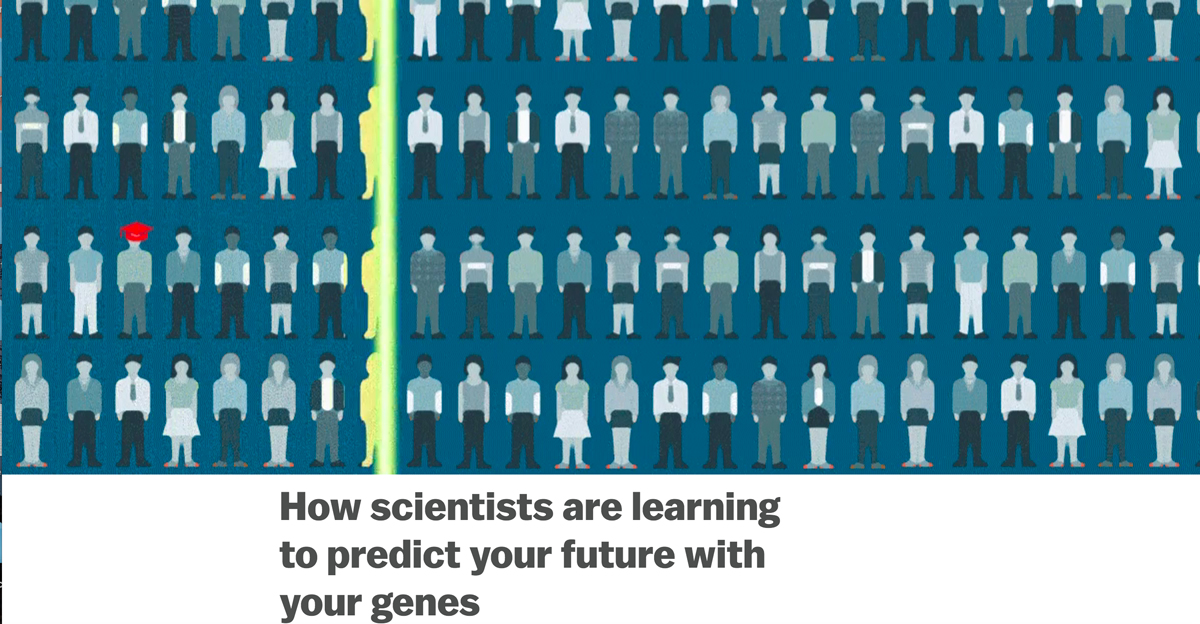

A Dangerous Brain: Can neuroscience predict how likely someone is to commit another crime?

Opinion vs. Objectivity, Truth vs. Lie
PunditFact
PunditFact is a project of the Tampa Bay Times and the Poynter Institute, dedicated to checking the accuracy of claims by pundits, columnists, bloggers, political analysts, the hosts and guests of talk shows, and other members of the media.
Pew Research Journalism Project – State of the Media
Medium taps into the brains of the world’s most insightful writers, thinkers, and storytellers to bring you the smartest takes on topics that matter. So whatever your interest, you can always find fresh thinking and unique perspectives.
Reddit – The Internet’s Front Page

Other news developments:
- The impact of new money flowing into the industry may be more about fostering new ways of reporting and reaching audience
- Native advertising: paid for by advertisers, written by journalists (Atlantic, Mashable, NYTimes)
10 Digital Trends – Journalism.co.uk
1) Mobile and responsive design
News outlets should be creating content designed specifically for different devices, whether users are at home using a tablet or perhaps at the airport using a smartphone.
2) Geo-targeted content
Geotargeted content will become just as important as real-time news with the use of apps.
3) Private social media
Snapchat and Instagram Direct and Twitter can now share direct message with photos – how do news organizations get content onto those platforms?
4) Drone journalism
Drone journalism, especially photography from drones, is going to become “not commonplace, but very frequently used” by the end of 2014.
5) Short-form video
Mobile devices are designed for short videos, mostly. So are new organisations going to respond to that by giving people that kind of content?
6) Real-time analytics
A trend for media organisations “really exploring analytics”.
7) Windows Phones
At the moment Windows Phones slightly fall down in that they have fantastic cameras, they just don’t have the apps that let you do clever things with the content you get.
8) Wearable tech
In technology [we can] expect more hype around wearable computing (iWatch), smart home appliances and the coming of age of 3D printing and virtual reality headsets (Oculus Rift).”
9) Anticipatory news
News that’s built around the data you’re sharing, for example your calendar or your location. Anticipating where folks will be and what they’re doing based on the information they’re building up.
10) Native advertising
News organizations using “creative solutions” or sponsored content.
1) The need to shield journalism in the post-Snowden era
The threat to investigative journalism posed by mass state surveillance, as revealed by the Snowden leaks, cannot be overestimated. It demands much more attention from editors globally, who have an obligation to ensure their journalists undertake basic cybersecurity training. — Guardian US editor Janine Gibson
2) The rebooting of mobile strategy as “wearables” hit the market
Even the term “mobile-first” is up for renewal as platform agnosticism meets the arrival of wearable news delivery devices.
3) The application of social media verification to support trust and credibility
“We have the ability to get news out faster than ever, but we will break it all if we don’t verify and get it right,” said Margaret Sullivan, the New York Times’ public editor.
4) The increasingly important role of newsroom data and analytics
Today, a journalist — and more widely anybody who produces content — who refuses to use data analytics to assess in real time the level of interaction he or she is having with the readers is someone who has decided not to turn the light on and stay in a dark room.”
5) The emergence of online video storytelling as a potential challenger to broadcasters
The trend is for short videos, according to AFP’s head of video, Marie Noelle Valles: “The point of entry is … a short, agile, quick video.”
6) The global collaborative journalism breaking new barriers
As crime and corruption go global, so does collaborative investigative journalism. From the Ukraine — where journalists from competing media organizations joined forces to salvage and document evidence of corruption in the hours after Viktor Yanukovych fled Kiev, forming #Yanukovychleaks — to cross-border investigations into organized crime by a new Italian investigative journalism collective.
7) The realization that digital mega-stories make an impact
Knight International Journalism Fellow and digital innovator Justin Arenstein highlights the value of small-scale data journalism projects designed for mega-impact.
8) Attempts to navigate the ethical challenges of native advertising
Native advertising — paid content designed to mimic editorial — continues to cause concern in newsrooms around the world. “There used to be a very clear wall between editorial and advertising, and this wall has crumbled, and it might have crumbled permanently.”
9) The evolving role of the editor to meet new business and technology challenges
Not only must he or she be an expert editorial manager and an excellent people manager and team leader, but also a person with the stomach to lead innovation, an entrepreneur’s approach to new technologies and products, and possibly even an MBA.
Post-Industrial Journalism: 20/20 Predictions (Tow Center Columbia)
- The Internet has unleashed demand for more narrative and more data-driven news, for a wider range of real-time sources and wider distribution of long-form pieces.
- There will be more nonprofit news organizations, driven by several kinds of donation—direct cash subsidy by philanthropies and other donor organizations (Ford Foundation funding Los Angeles Times reporters; William Penn Foundation funding PennPraxis), user donations of cash (NPR; TPM), and in-kind donations of the time and talents of a particular community (as with the creation of Wikipedia disaster articles, or Twitter hashtag streams).
- One of the great surprises of Twitter, a medium built around “short” and “now,” is how much demand it has exposed for long-form writing and video. News.me, a recent startup, filters through people’s Twitter feeds and recommends the most widely viewed links from previous 24 hours; a remarkable amount of what gets surfaced is not singing cats but long, careful pieces of reporting or opinion.
- Each newsroom will become more specialized, with less simple replaceability of employees and functions from one newsroom to the next. Each newsroom will have a better sense of who its partners are, among institutions and the general public, and will have customized its sense of how best to work with them.
Resources:
Post-Industrial Journalism
Encyclo – Neiman encyclopedia of the future of news
Free Future – MIT civil liberties in a digital age
Neiman – Predictions for journalism